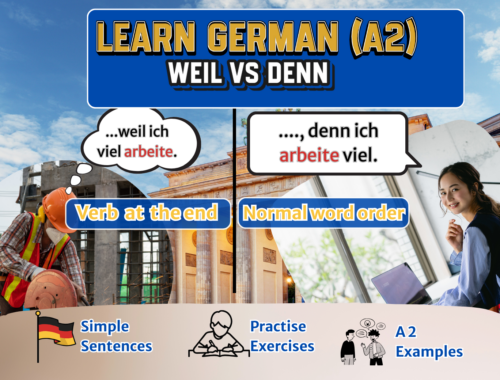
Weil vs Denn in German (A2): How to Give Reasons Simply
At A2 level, learners want to say more than just what they feel or do.They also want to explain why. In German, the two most common words to give a reason are weil and denn.Both mean because, but they are…
How to Talk About Feelings and First Impressions in German (A2)
When you reach A2 level in German, you can already talk about simple topics like your name, your job, or your daily routine.At this level, learners often want to say more: how they feel, what is new or difficult, and…
Weather and Seasons in German (A1): Simple Vocabulary & Examples
Talking about the weather and the seasons is one of the most common topics at A1 level. You use it to make small talk, describe daily life, and talk about plans. In this guide, you’ll learn: This topic works best…
A1 German Pronunciation Guide (Alphabet, Sounds & Common Mistakes)
German pronunciation often feels intimidating for beginners, especially because some sounds do not exist in English. The good news is that German pronunciation is logical and consistent. Once you learn the basic rules, most words are pronounced exactly as written.…
German Cases Explained Simply (A1–A2 Beginners)
When learning German, many beginners notice something confusing very quickly:articles and words seem to change, even though the meaning stays the same. This happens because German uses cases. If you’re new to grammar, don’t worry — at A1 level, you…
How to Introduce Yourself in German
Being able to introduce yourself in German is one of the very first and most important skills at A1 level. Whether you’re meeting new people, registering for a course, visiting an office, or preparing for an exam, this is something…
Negation in German
nicht vs kein Explained Simply One of the first things learners want to do in German is say “no”, “not”, or “don’t”.At A1 level, this is easier than it looks — German mainly uses two words for negation: 👉 nicht👉…
A1 German Daily Routine Vocabulary
Learning how to talk about your daily routine is one of the most important skills at A1 German level. It helps you describe your day, talk about habits, and understand simple conversations in German. If you are completely new to…
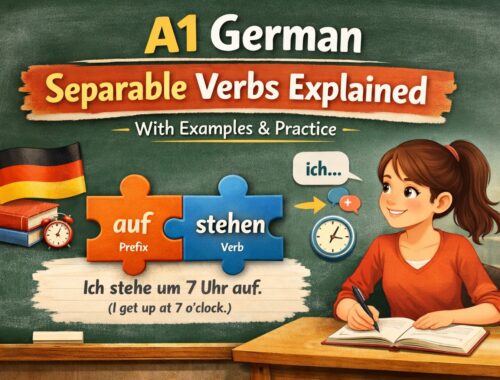
A1 German Separable Verbs Explained
If you’re learning German at A1 level, you will quickly notice something unusual:some verbs seem to split into two parts. This can feel confusing at first, especially when you see verbs like aufstehen or ankommen. The good news is that…
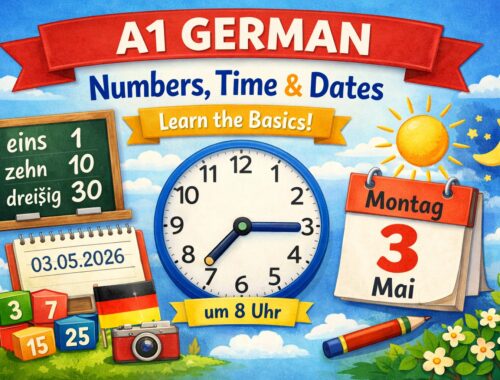
A1 German Numbers, Time and Dates
Learning numbers, time, and dates in German is a key part of A1 German. These basics help you talk about your daily routine, understand appointments, and communicate clearly in everyday situations. If you are completely new to German, it’s best…