Weather and Seasons in German (A1): Simple Vocabulary & Examples
Talking about the weather and the seasons is one of the most common topics at A1 level. You use it to make small talk, describe daily life, and talk about plans. In this guide, you’ll learn: This topic works best…
A1 German Modal Verbs Explained (können, müssen, wollen & möchten)
German modal verbs are essential at A1 level because they help you express: You will hear modal verbs in almost every everyday German conversation. At A1 level, the goal is clear communication, not perfect grammar. If you’re completely new to…
A1 German Pronunciation Guide (Alphabet, Sounds & Common Mistakes)
German pronunciation often feels intimidating for beginners, especially because some sounds do not exist in English. The good news is that German pronunciation is logical and consistent. Once you learn the basic rules, most words are pronounced exactly as written.…
German Cases Explained Simply (A1–A2 Beginners)
When learning German, many beginners notice something confusing very quickly:articles and words seem to change, even though the meaning stays the same. This happens because German uses cases. If you’re new to grammar, don’t worry — at A1 level, you…
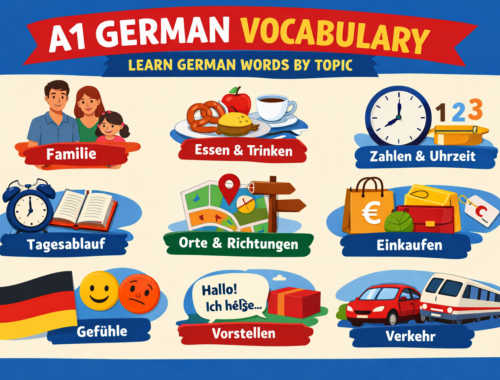
A1 German Vocabulary Topics
What to Learn as a Beginner Learning German at A1 level means building vocabulary alongside basic grammar structures so you can form clear, simple sentences. Vocabulary alone is not enough — learners must also understand sentence structure, verb forms, and…
A1 German Basics: How to Start Learning German.
Learning German as a complete beginner can feel overwhelming at first — new sounds, unfamiliar grammar, and long words. The good news is that German at A1 level is very structured and logical, and with the right approach, you can…