Verbs with Prepositions in German (A2): Simple Explanation and Examples
At A2 level in German, you already know many basic verbs like gehen, machen, or lernen.But then you see sentences like: And suddenly, German feels more difficult. This happens because some verbs in German always need a preposition.In this post,…
Talking About Health, Sport and Lifestyle in German (A2)
At A2 level in German, learners begin to talk not only about daily routines, but also about health, sport, and lifestyle. This topic is important because it helps learners: In this guide, you will learn how to talk about health,…
Giving Advice and Talking About Conditions in German (A2): wenn and sollte
At A2 level, German learners move beyond simple statements.You don’t just say what you do — you also start to say: These two ideas are very common in everyday German: In this post, you will learn how to use wenn…
Talking About Your Job and Daily Work in German (A2)
At A2 level, learners want to talk about more than just their name or country.A very important topic at this stage is work: your job, your daily tasks, and your routine at work. This topic is especially useful if you:…
Making Suggestions and Invitations in German (A2)
At A2 level, learners want to do more than describe things.You want to suggest activities, invite people, and react politely when someone asks you to do something. These skills are essential in everyday life, for example when you: In this…
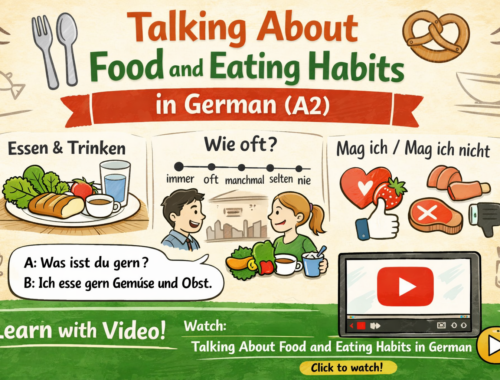
Talking About Food and Eating Habits in German (A2)
Food is one of the most common topics in everyday conversations.At A2 level, learners want to talk about what they eat, how often they eat, and what they like or don’t like. This topic is especially important when you: In…
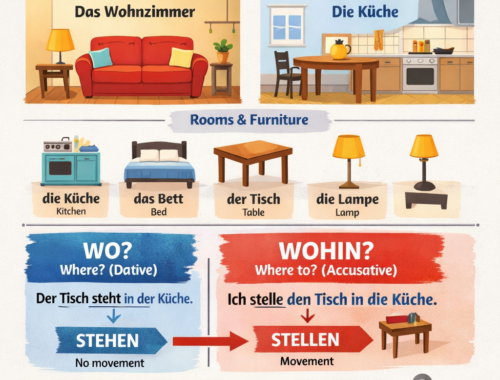
Describing Your Home in German (A2): Rooms, Furniture and Position
Talking about your home is a very common topic when learning German.You may want to describe: In everyday German conversations, people often talk about their homes, apartments, or rooms. In this lesson, you will learn how to: All examples are…
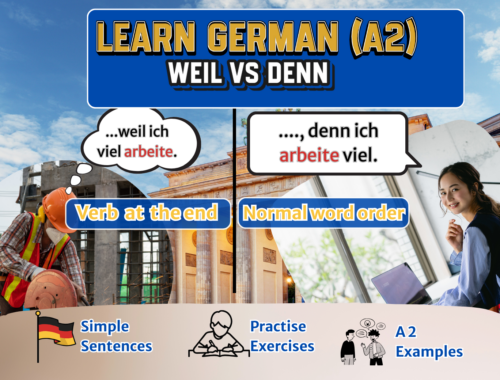
Weil vs Denn in German (A2): How to Give Reasons Simply
At A2 level, learners want to say more than just what they feel or do.They also want to explain why. In German, the two most common words to give a reason are weil and denn.Both mean because, but they are…
How to Talk About Feelings and First Impressions in German (A2)
When you reach A2 level in German, you can already talk about simple topics like your name, your job, or your daily routine.At this level, learners often want to say more: how they feel, what is new or difficult, and…
A2 German Explained: What You Learn and How to Progress
If you are learning German and already know some basics, you may be at A2 level.But what does A2 really mean, and what should you be able to do at this stage? In this guide, you’ll learn: This article also…