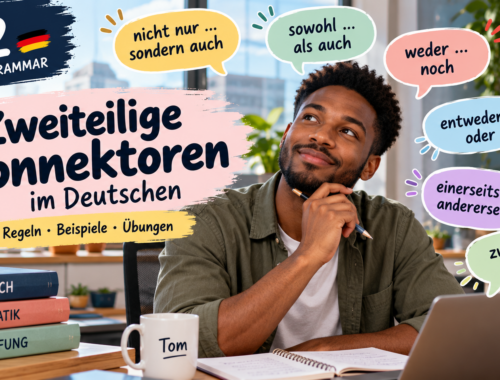
Zweiteilige Konnektoren im Deutschen: B2-Grammatik einfach erklärt
1. What are zweiteilige Konnektoren? Zweiteilige Konnektoren, also called zweiteilige Konjunktionen or paired conjunctions, are expressions made up of two parts that work together to connect words, phrases or clauses. They help you express relationships such as addition, alternatives, negation…
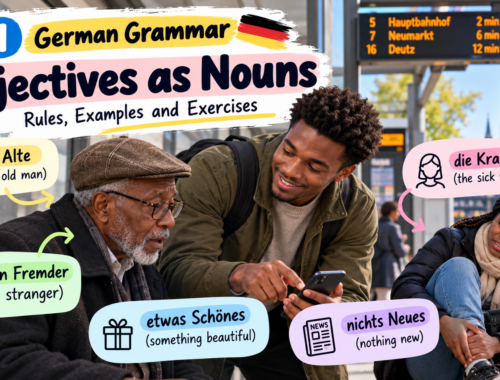
B1 German Grammar: Adjectives as Nouns (Nominalisierte Adjektive) – Rules, Examples and Exercises
Have you ever seen German expressions such as der Alte, die Kranke or das Gute and wondered why an adjective suddenly looks like a noun? At B1 level, you need to understand how German adjectives can be used as nouns.…
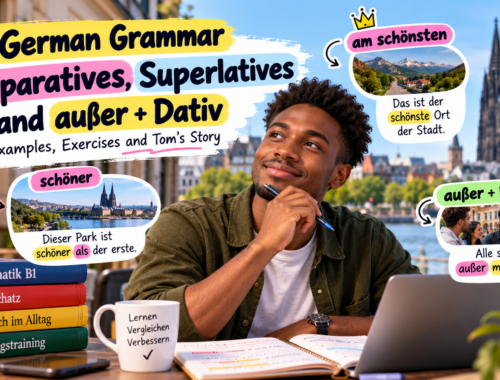
B1 German Grammar: Comparatives, Superlatives and „Außer + Dativ“ (With Examples and Exercises)
Have you ever wanted to explain why one place is more beautiful than another, describe the best experience you have ever had, or explain who is allowed to participate in an activity? At B1 level, you need more than basic…
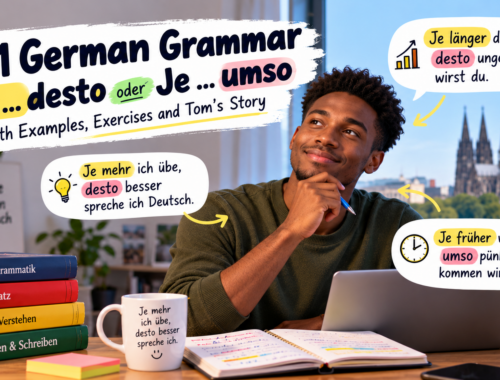
B1 German Grammar: How to Use „Je … desto“ and „Je … umso“ (With Examples and Exercises)
Have you ever wanted to say, “The more you practise, the better you become” in German? At B1 level, you need structures that help you express relationships between actions, changes, and results. One of the most useful German grammar structures…
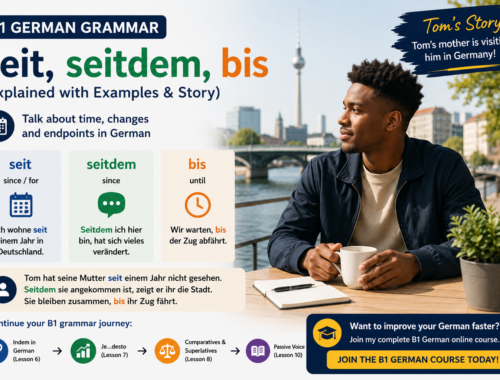
B1 German: How to Use „seit“, „seitdem“ and „bis“ (Explained with Examples & Story)
Introduction In this lesson, you will learn how to use: These structures are useful when talking about: To make the grammar easier and more interesting, we will continue Tom’s story. 👉 Before reading this lesson, make sure you have read:…
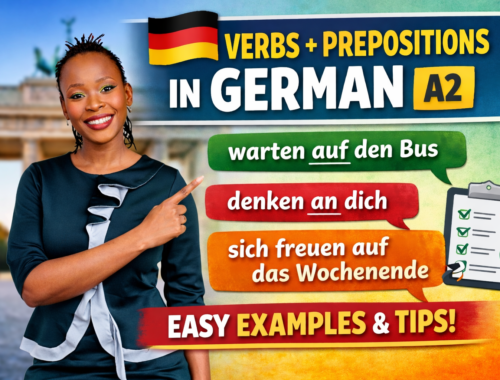
Verbs with Prepositions in German (A2): Simple Explanation and Examples
At A2 level in German, you already know many basic verbs like gehen, machen, or lernen.But then you see sentences like: And suddenly, German feels more difficult. This happens because some verbs in German always need a preposition.In this post,…
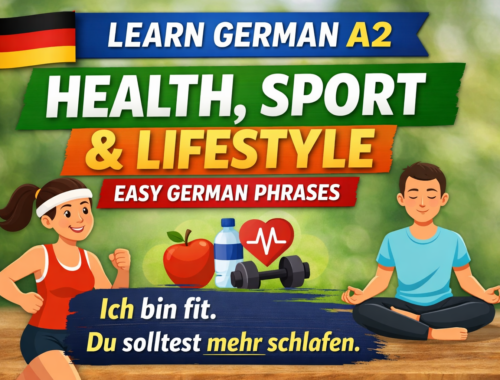
Talking About Health, Sport and Lifestyle in German (A2)
At A2 level in German, learners begin to talk not only about daily routines, but also about health, sport, and lifestyle. This topic is important because it helps learners: In this guide, you will learn how to talk about health,…
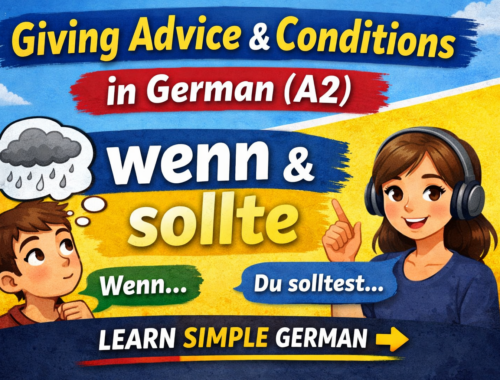
Giving Advice and Talking About Conditions in German (A2): wenn and sollte
At A2 level, German learners move beyond simple statements.You don’t just say what you do — you also start to say: These two ideas are very common in everyday German: In this post, you will learn how to use wenn…
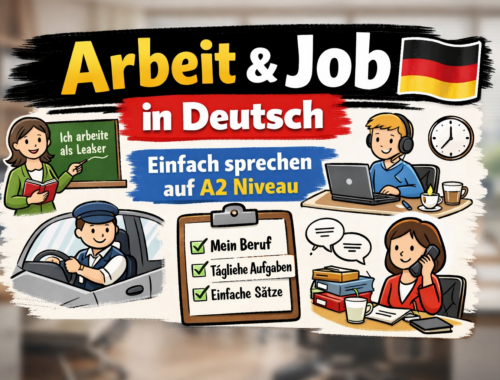
Talking About Your Job and Daily Work in German (A2)
At A2 level, learners want to talk about more than just their name or country.A very important topic at this stage is work: your job, your daily tasks, and your routine at work. This topic is especially useful if you:…
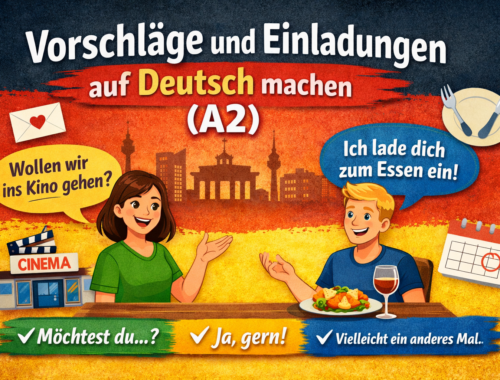
Making Suggestions and Invitations in German (A2)
At A2 level, learners want to do more than describe things.You want to suggest activities, invite people, and react politely when someone asks you to do something. These skills are essential in everyday life, for example when you: In this…